
Cochise Newsroom
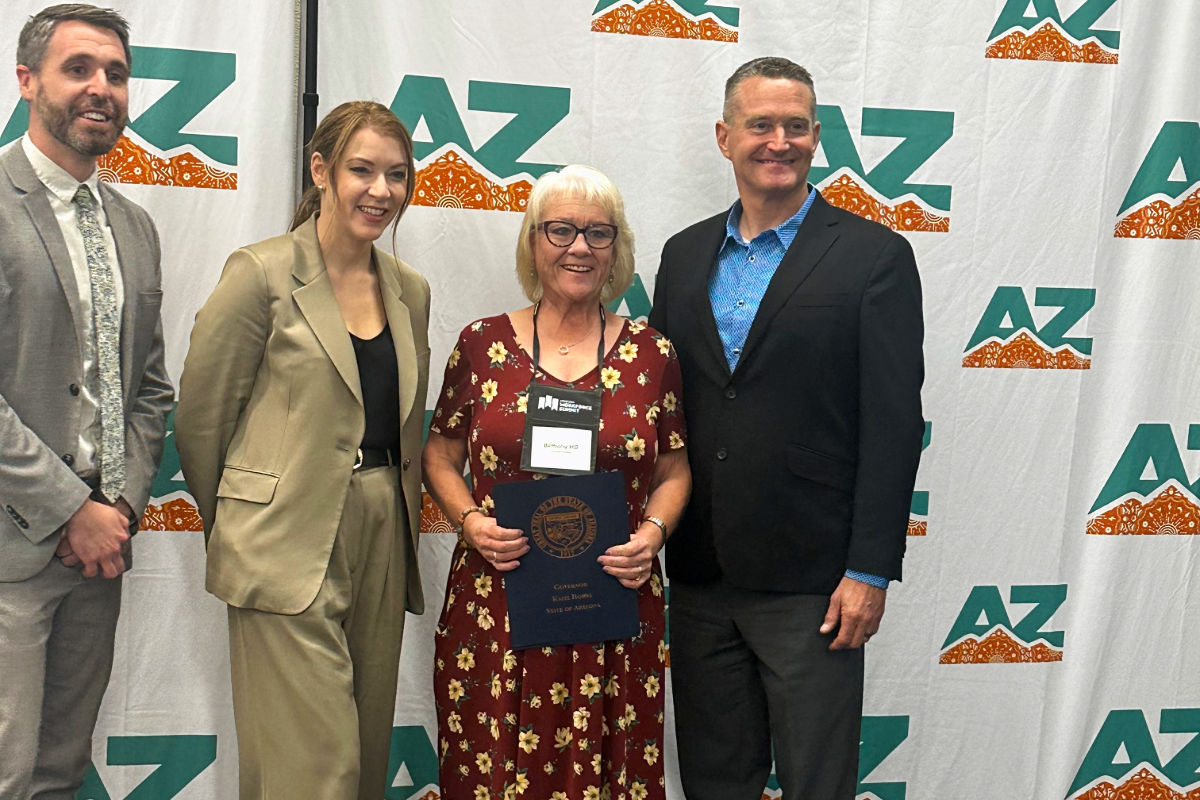
Four nursing programs have earned Arizona’s 2026 High-Impact Training designation, recognizing employment, job retention and earnings outcomes that exceeded expectations for participants who received workforce training through the Workforce Innovation and Opportunity Act.
The Arizona Office of Economic Opportunity and the Governor’s Workforce Arizona Council recognized the following Cochise College programs:
- Nursing — Associate of Applied Science
- LPN to Professional Nurse — Associate of Applied Science
- Practical Nursing — Certificate
- Nursing Assistant — Certificate
The college’s programs were among 40 ARIZONA@WORK Adult training programs honored during a recognition luncheon at the 2026 Arizona Workforce Summit. The designations were awarded based on the state’s 2025 evaluation.
Bethany Hill, DNP, the dean of nursing and allied health, said the recognition reflects the dedication of the faculty, staff and community partners who help prepare students for essential health care professions.
“I was honored and extremely proud,” Dr. Hill said. “These awards validate the hard work and dedication of our faculty, staff, clinical partners and students.”
Hill said the state’s recognition is especially meaningful because Cochise College’s nursing programs help meet the workforce needs of our communities.
The High-Impact Training, or HIT, designation looks beyond enrollment or completion. The state examines whether students find employment, remain employed and earn competitive wages after completing their education.
The state analyzed approximately 17,000 participants across 56 training providers and 82 programs. Program evaluation requirements included having at least five program completers. The analysis measured employment during the second and fourth quarters after participants exited the program and median earnings during the second quarter.
The Arizona Office of Economic Opportunity used a predictive model that considered participant demographics, barriers to employment and local economic conditions. Programs earned the HIT designation when their actual results exceeded the outcomes predicted by the model.
At Cochise College, recognition across four nursing programs reflects the strength and impact of an educational pathway that can take a student from entry-level patient care to professional nursing careers.
“Receiving recognition for multiple nursing pathways demonstrates our commitment to student success and program excellence,” Hill said.
The Nursing Assistant Certificate can be completed in one semester and prepares students to pursue state certification and begin working as certified nursing assistants. The Practical Nursing Certificate prepares graduates to take the national licensing examination to become licensed practical nurses.
The Nursing Associate of Applied Science program prepares graduates to take the NCLEX-RN and pursue licensure as registered nurses. The LPN to Professional Nurse degree provides a pathway for licensed practical nurses seeking to advance their education and careers. Together, the programs offer students options for entry-level patient care and for advancing.
Hill said several factors contributed to the programs’ success, including student completion and workforce placement, preparation for professional licensing, ongoing quality assurance and partnerships with hospitals, clinics, long-term care facilities and other health care providers throughout southeastern Arizona.
The programs also provide opportunities for students to advance from certified nursing assistant to licensed practical nurse and then registered nurse, increasing their skills, career options and earning potential along the way.
“This recognition reinforces the critical role the college plays in addressing health care workforce shortages throughout Arizona,” Hill said. “For the Nursing and Allied Health Division, it confirms that our programs are producing graduates who successfully complete their education, enter the workforce and contribute meaningfully to the communities they serve.”
The designation also highlights the role rural colleges play in connecting education directly with regional workforce needs. Cochise College students receive classroom, laboratory and clinical instruction, with clinical experiences offered through health care organizations in Cochise and Pima counties.
“As a rural institution, we are particularly proud to provide opportunities that allow students to build careers locally while helping health care organizations recruit and retain qualified staff,” Hill said.
The HIT designation will be reevaluated annually using the most current performance information, ensuring recognized programs continue to demonstrate measurable results for participants and employers.
Hill emphasized that the recognition reflects a collective effort extending beyond the college.
“This recognition belongs to our faculty, staff, students and community partners,” she said. “Their dedication makes these outcomes possible.”
For Hill, the impact can ultimately be measured in the graduates who care for their neighbors and help our communities maintain access to quality health care.
“Every graduate represents a health care professional who will provide care in our communities, strengthen Arizona’s health care workforce and improve access to quality health care for rural residents,” Hill said. “Through these programs, we are not only educating students we are helping build the future health care workforce for Arizona.”
For more information about Cochise College’s nursing and allied health programs, visit www.cochise.edu.
Credits
- Writer
Cochise College News
- DATE
July 21, 2026
Share This